

MAP Views Third Quarter 2026
Jul 06, 2026Stocks around the world posted solid gains, as tensions de-escalated in the Middle East and companies reported impressive earnings growth. The S&P 500 posted its best quarterly performance in six years, appreciating 14.9%. Equity gains were not isolated to the U.S., with the MSCI ACWI rising 14.5%. Major European indices made up for losses incurred since the war in the Middle East began, finishing the quarter near record highs.
Stock market gains were fueled by stout corporate earnings. Going into the beginning of the quarter, Wall Street analysts were forecasting EPS growth of approximately 12.4% for the S&P 500. Earnings instead delivered an astonishing 29.6% growth. Technology (specifically memory and hardware companies) and Communication Services delivered the bulk of the gains, both posting over 50% year-over-year earnings growth. The once Magnificent Seven gained as a whole, but returns were lackluster relative to history. Even outside the U.S., earnings posted impressive low double-digit growth.
Semiconductor stocks enjoyed their best quarter ever, driven by insatiable demand for artificial intelligence equipment. The Philadelphia Stock Exchange Semiconductor Index soared 81% in the second quarter, putting its year-to-date gains at 94%. If the year-to-date gains hold for the balance of the year, this will mark its best year since the dot-com-era boom of 1999. Whether these gains will hold is debatable. As of quarter end, the sector accounted for nearly 20% of the S&P 500, quadrupling from June 2020, and surpassing previous market peaks. The sector weakened during the last week of the quarter, marked by premium valuations and heightened volatility.
We attribute much of the volatility to investors' growing use of leverage. Margin debt has grown to a record $1.4 trillion through May 31, 2026. Also, many investors have piled into leveraged sector Exchange-Traded Funds (ETFs) that magnify sector returns by two times or even three times, and into individual stock ETFs that double the performance of an underlying stock. Investors, or should we say speculators, can “bet” on either the stocks going higher or lower. Such vehicles have grown from under $50 billion in assets just a couple of years ago to over $200 billion today. This, in large part, explains why it is not uncommon for stocks in this space to move materially on any given day without any apparent news. Momentum leads to further momentum when leverage is thrown into the mix.
The defensiveness of the S&P 500 (percentage of the index invested in consumer staples, healthcare, real estate, and utilities) is at its lowest level since the peak of the dot-com bubble in March 2000. We believe this period is akin to the dot-com bubble whereby the commercialization of the internet saw technology, media, and telecommunications stocks appreciate significantly, crowding out other sectors. The S&P 500 Index has experienced record concentration, with the top 10 largest companies comprising roughly 40% of the entire benchmark. This level of market concentration represents a historic high, roughly doubling over the last decade driven in large part by the factors we mentioned above.
Kevin Warsh became the new Chairman of the Federal Reserve (“the Fed”), a challenging job to say the least. Chairman Warsh inherits an economy with elevated inflation. Inflation has proven to be anything but transitory since the economy has adjusted to a post-COVID environment. Higher energy prices, fueled by the war in the Middle East, pushed inflation to its highest level since early 2023. While the recent decline in energy costs will likely lead to lower rates of CPI growth, we would note that even before the war began, inflation numbers were well above the Fed’s 2% target.
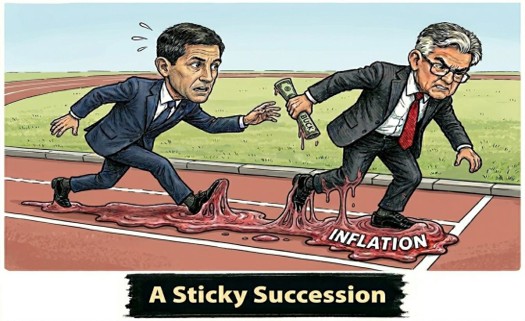
Created by ChatGPT
Chairman Warsh appears to have taken the approach that the Fed under his helm will not be as open in sharing its thoughts as his recent predecessors were. Wall Street has interpreted this silence as hawkish. For example, the Fed funds futures market is pricing in a 30% probability that the Fed will raise rates at its July meeting. We strongly discount this probability. Despite elevated inflation, we view it as unlikely that the Fed will raise interest rates. We believe they will take a wait-and-see approach, especially since energy prices have fallen back close to where they were before the war began.
Additionally, we view a Fed rate hike as unlikely going into what will be highly contested midterm elections. Recall the criticism that previous Chairman Jerome Powell took for cutting interest rates after Labor Day in 2024. George Bush blamed Alan Greenspan for raising interest rates ahead of the election for his 1992 presidential election loss to Bill Clinton. Given President Trump’s affection for lower interest rates, we doubt that his handpicked candidate would raise rates heading into November.
Nonetheless, perceptions of higher interest rates have pushed the U.S. dollar higher. We view this as more of a short-term phenomenon rather than the beginning of a long-term trend. A strong U.S. dollar makes it challenging for the American industry, manufacturers, and farmers. Recall, those groups were the hallmark of Trump’s campaigns in 2016, 2020, and 2024. The dollar moved lower under Trump’s first term and is still lower than it was at the beginning of his second term.
Another theme worth watching is the plan by many of the world’s central banks to cut dollar allocations rather than increase them in the coming decade, as political risks associated with the U.S. dollar rise. And while there is no clear alternative to the dollar, a survey conducted by the Official Monetary and Financial Institutions Forum recently showed nearly 80% of central banks and 60% of public funds believe the global monetary system is transitioning towards a multipolar world.1 In the short term, gold is the asset in which central banks plan most to increase holdings, with a net 30% of respondents intending to boost their allocation over the next one to two years.
As we have opined in previous issues of MAP Views, over the next few years, we continue to believe the U.S. dollar will trend lower.
Looking ahead, our conviction remains rooted in the principles that have guided our investment process for decades. Markets will fluctuate, headlines will shift, and uncertainty will persist. Rather than trying to predict short-term outcomes, we will continue to focus on identifying quality businesses at attractive valuations and managing risk with discipline.
We believe this patient, value-oriented approach is well-positioned to deliver competitive long-term returns while helping reduce the impact of market volatility. Our objective is not to outperform in every quarter or market environment, but to compound our clients’ capital responsibly over time through thoughtful security selection, prudent risk management, and unwavering investment discipline.
We appreciate the trust you place in us and remain committed to serving as prudent stewards of your capital. Thank you for your continued confidence and partnership. We wish you an enjoyable and safe summer.
To hear the Investment Team’s weekly market thoughts, please visit MAP’s website for our weekly webinar.
Managed Asset Portfolios Investment Team
Michael Dzialo, Karen Culver, Peter Swan, Zachary Fellows, and Nicolas Vilotti
July 2026
1https://pdf.omfif.org/global-public-investor-2026
Certain statements made by us may be forward-looking statements and projections which describe our strategies, goals, outlook, expectations, or projections. These statements are only predictions and involve known and unknown risks, uncertainties, and other factors that may cause actual results to differ materially from those expressed or implied by such forward-looking statements. The information contained herein represents our views as of the aforementioned date and does not represent a recommendation by us to buy or sell this security or any other financial instrument associated with it. Managed Asset Portfolios, our clients and our employees may buy, sell, or hold any or all of the securities mentioned. We are not obligated to provide an update if any of the figures or views presented change.

